
 1800 066 846
 Behind the Scenes: What a Day on the Job Actually Looks Like for a Removalist
Having to move can already be very stressful, but not knowing whether your items will arrive safely or not makes it worse. Take a look at what happens in a removalist’s life when they start working on a job, beginning with the initial depot meeting and ending with the delivery.
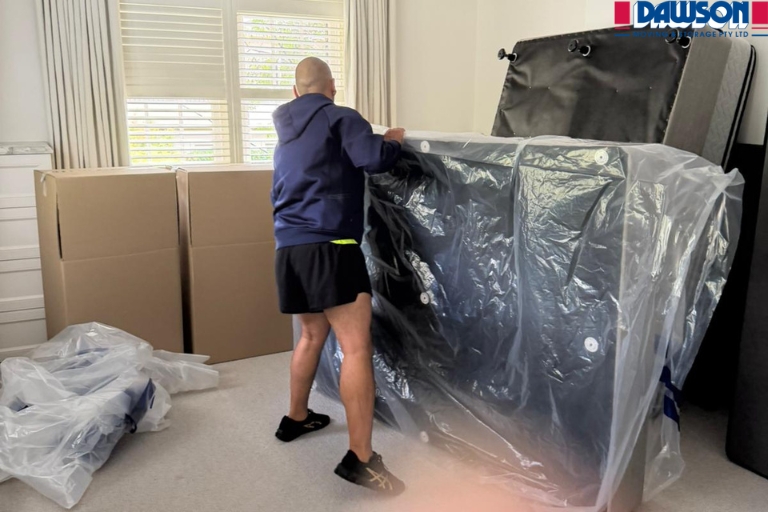
Moving house is a big deal, but have you wondered what goes on behind the scenes for a removalist? From the outside, a move might look like a bunch of blokes chucking boxes into a truck. But if you’ve ever watched a proper removals crew work, you’ll know there’s a whole lot more going on under the surface. It’s one part logistics, one part problem-solving, and one part genuinely caring about the stuff you’ve spent a lifetime collecting.
At Dawson Moving & Storage, we’ve been doing this for over 60 years – from local jobs around the corner to interstate removals from Melbourne to the other side of the country, and even full international moves overseas. Here’s what a typical day on the job actually looks like for our team.
It Starts Before We Even Leave the Depot
Most people assume the job kicks off when the truck pulls into your driveway. Not quite. The real work starts early, back at the depot, where the crew gathers to go over the game plan before anyone’s had their second coffee.
We sit down and go through the inventory for the day. We flag anything that needs special handling – a piano, a marble dining table, Grandma’s antique dresser that she’d never let you forget about. We look at the access conditions at both properties: narrow driveways, flights of stairs, tight corners, heritage buildings with doorways that clearly weren’t designed with modern furniture in mind.
For interstate removals out of Melbourne, we also check that the truck is in top nick – mechanically sound, fully fuelled, and ready for the long haul ahead. You don’t want to be troubleshooting a mechanical issue somewhere past Albury.
Before we hit the road, the truck gets loaded with everything we need: thick quilted furniture blankets, high-tensile straps, a range of trolleys for different jobs, and quality packing materials. The motto around here is simple – if you’re prepared, you’re not panicking.
Arriving at Your Place
Moving day is already a lot. When we arrive, we do an actual walk-through with you before anything gets touched. It’s how we build the load order: our mental map of what goes in first, what goes in last, what needs to be kept together, and what needs extra care.
This conversation also lets us catch anything that might’ve been missed in the initial quote – a piece that’s been added to the move, or a tricky corner we need to plan around. Better to know now than halfway through the job.
From there, the crew settles into their roles and gets to work:
● The Loader stays in the truck and treats the cargo hold like a giant 3D puzzle. It sounds simple, but there’s real skill in it. Every cubic metre needs to be used efficiently, and the weight has to be distributed correctly – not just so everything fits, but because an unbalanced load is a road safety issue, especially on a long interstate run.
● The Runners are the link between the house and the truck. They need to be agile, switched on, and constantly communicating – especially when you’ve got tight hallways, low ceilings, or a staircase that bends in exactly the wrong direction. These are the people who’ll carry your couch sideways through a doorway without leaving a single scuff mark on the paintwork.
Wrapping It Up Properly
No furniture goes near the truck until it’s packed properly. Every polished timber surface, every glass panel, every upholstered piece gets encased in thick, protective blankets. While this may appear to be overkill in case of a local relocation, when you think about long-distance relocations out of Melbourne, where your items would travel more than a thousand kilometres and be subject to all kinds of hazards during transit, you realise that this is what will determine whether you will arrive in good shape or not.
For international moves, we take it up another level entirely. Export wrapping involves multiple layers of cardboard and moisture-resistant barriers specifically designed to handle the humidity and movement of a sea freight journey. Your belongings need to survive being loaded onto a ship, crossing an ocean, and being unloaded at the other end. We make sure they do.
The right gear makes a big difference here, too. We’re not just using whatever’s lying around:
● Upright hand trucks handle stacked cartons safely and keep the runners moving efficiently.
● Furniture skates (dollies) let us glide heavy, flat-bottomed items across hard floors without gouging them.
● Shoulder dolly straps are ergonomic harnesses that transfer the weight of heavy items to your legs rather than your lower back – an absolute game changer for appliances and oversized furniture.
Where Experience Matters
Getting a king-size mattress around the bend of a tight staircase. Navigating a solid marble dining table through a doorway with two centimetres of clearance on each side. Lowering a large display cabinet down a narrow external staircase without it tipping. This is where the years of experience genuinely show.
It’s not about brute force. It’s about technique, angle, and knowing how to use mechanical advantage to your favour. Ramps to avoid stairs where possible. Specialised straps that lower an item’s centre of gravity and give you more control. Tilting and rotating techniques that turn an impossible-looking job into a manageable one.
For fragile or high-value items, we use double-boxing – placing a wrapped item inside one box, then cushioning and boxing it again. For particularly precious pieces, we build custom timber crates. And for international removals, items are packed with such precision that they remain completely immobile regardless of what’s happening around them – including the shifting and rolling motion of a vessel at sea.
None of this happens by accident. It’s the result of proper training, the right materials, and taking pride in the job.
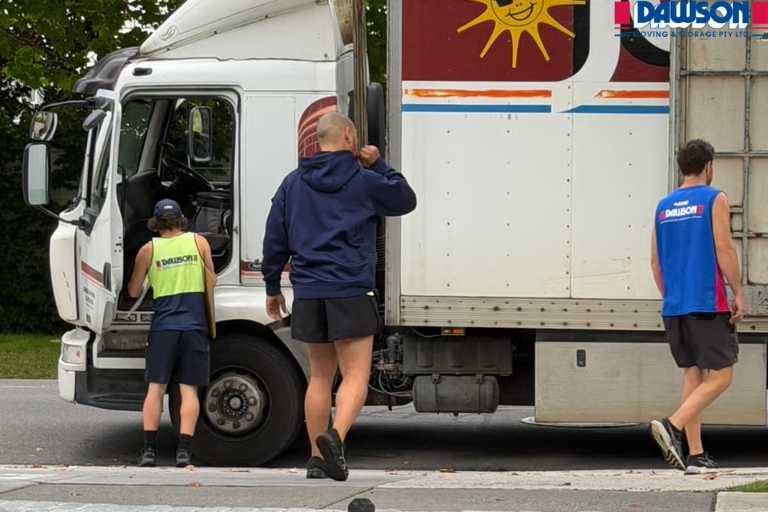
Thinking on Your Feet – Because Nothing Ever Goes 100% to Plan
While the physical work is happening, someone’s always thinking about the bigger picture. Route planning for interstate removals is more involved than just plugging an address into Google Maps. Low-clearance bridges, residential streets with truck weight restrictions, peak hour through the CBD – all of it has to be factored in, especially when you’re responsible for getting a full truckload of someone’s belongings safely from Melbourne to Brisbane or beyond.
And then there are the curveballs. An afternoon storm rolls in out of nowhere. A sofa that comfortably entered the old house somehow refuses to leave. A lift that’s been booked for the afternoon is suddenly out of service. These things happen, and the measure of a good crew is how calmly and efficiently they solve the problem.
Waterproof floor runners go down in seconds. A balcony hoist gets rigged for furniture that can’t make it through a standard doorway. A different route gets mapped on the spot. The client stays informed and reassured throughout. That’s the job.
The Drop-Off: Making It Feel Like Home
The second half of the day is just as important as the first, and it’s honestly where a lot of crews fall short. Dropping everything in the garage and heading off might technically be “done,” but it’s not good enough.
When we deliver, we place furniture exactly where you want it. Beds get reassembled, and the couch goes in the right spot. Packing materials get cleared from the pathways so you’re not navigating an obstacle course on your first night. The goal is to leave you in a home that actually feels like home, not a storage facility with your name on the lease.
Why It’s Worth Going Professional
A day in the life of a removalist is genuinely demanding – physically hard, mentally sharp, and emotionally invested in getting things right. When you book a professional service, you’re not just hiring a truck with some muscle attached. You’re getting:
● Safety – We know how to move heavy, awkward, and fragile items without damaging your property, your belongings, or our crew.
● Peace of mind – Your stuff is with people who do this every single day and actually give a damn whether it arrives in one piece.
● Efficiency – What might take you weeks to organise and a full weekend of sweat and arguments, our team can handle seamlessly in a fraction of the time.
● Real expertise – Whether it’s a local apartment move, a long-haul interstate removal from Melbourne, or a full international relocation, 60 years of experience means we’ve seen it all and handled it well.
At Dawson Moving & Storage, we reckon a good move is one where you barely have to think about the moving part. That’s what we show up to deliver, every single day.
FAQs
What does a typical day look like for professional removalists?
The day kicks off early at the depot with a quick brew and a briefing. The crew preps the truck and gear before heading to your place. It’s then a steady rhythm of packing, loading, and driving, finishing up with a careful unpack at your new front door.
What tasks do removalists perform during a move?
The boys handle the heavy lifting from start to finish. They’ll walk through the house, wrap your furniture like it’s their own, and pack the truck. At the other end, they’ll get everything into the right rooms and put your beds back together so you’re all set.
What equipment and tools do removalists use daily?
We don’t go anywhere without our heavy-duty blankets, ties, and a range of trolleys. We use dollies for the flat stuff, lifting straps for the big appliances, and top-notch wrap for international removals to make sure everything stays safe and sound across the pond.
How do removalists handle heavy or fragile items safely?
It’s all about working smarter, not harder. We use ramps and special straps to save our backs and your floors. Fragile gear gets double-wrapped or crated. For International removals, we secure everything extra-tightly so nothing budges when the ship starts rolling on the open sea.
How do removalists plan and organise a moving day?
We start by mapping out the “load order”. Then navigate the best route to avoid low bridges and nasty traffic, ensuring our interstate removals Melbourne stay right on track without any dramas.
What safety procedures do professional removalists follow?
Safety is a big one. We use proper lifting forms, wear high-vis gear, and put down floor runners so no one slips. For interstate removals in Melbourne, we make sure our drivers take their mandated breaks because a tired driver is a dangerous one. Everyone gets home safe.
How many team members are involved in a standard move?
Usually, you’ll see a solid crew of two to four people. You’ve got your loader, who’s the architect in the truck, and the runners doing the legwork. For a massive house or interstate removals in Melbourne, we’ll bring in a few extra hands to get the job done right.
How do removalists coordinate with clients during the move?
We’re big on communication. We’ll have a chat when we arrive to see what’s what, give you updates as we go, and double-check where you want your lounge and fridge at the new place. We want you to be happy and relaxed before we head off.
What challenges do removalists face, and how are they solved?
Whether it’s a sudden Melbourne downpour or a sofa that won’t fit through the door, we’ve seen it all. We use waterproof covers for the rain and sometimes have to take a door off its hinges. Whatever the snag, we find a way to make it work.


Call our Friendly Team
of Removalists on
- Melbourne | (03) 9763 0222
- Canberra | (02) 6260 1214
- Interstate | 1800 066 846
- International | 1800 066 846
Write a Comment:
INTERSTATE
REMOVALISTS
Recent Posts
CLIENT
TESTIMONIALS
-
We were very happy with the 3 guys who we had who went out of their way to may the day run as smoothly as possible. Would definitely use you guys again!
Sam & Tracey
-
Thankyou to Dawsons for making our move from Melbourne to Leeton a very smooth move. Thanks to the drivers and workers all did a fantastic job thankyou.
Faye
-
I just want to thank you for your moving of my furniture on Tuesday. The chaps were so helpful and did a great job.
Jan


No Reviews yet.